Azusa highlight
Historic downtown
Azusa was incorporated as a city in 1898, after banker Jonathan Slauson laid out its plans in 1887, and its historic downtown retains the character of that era.
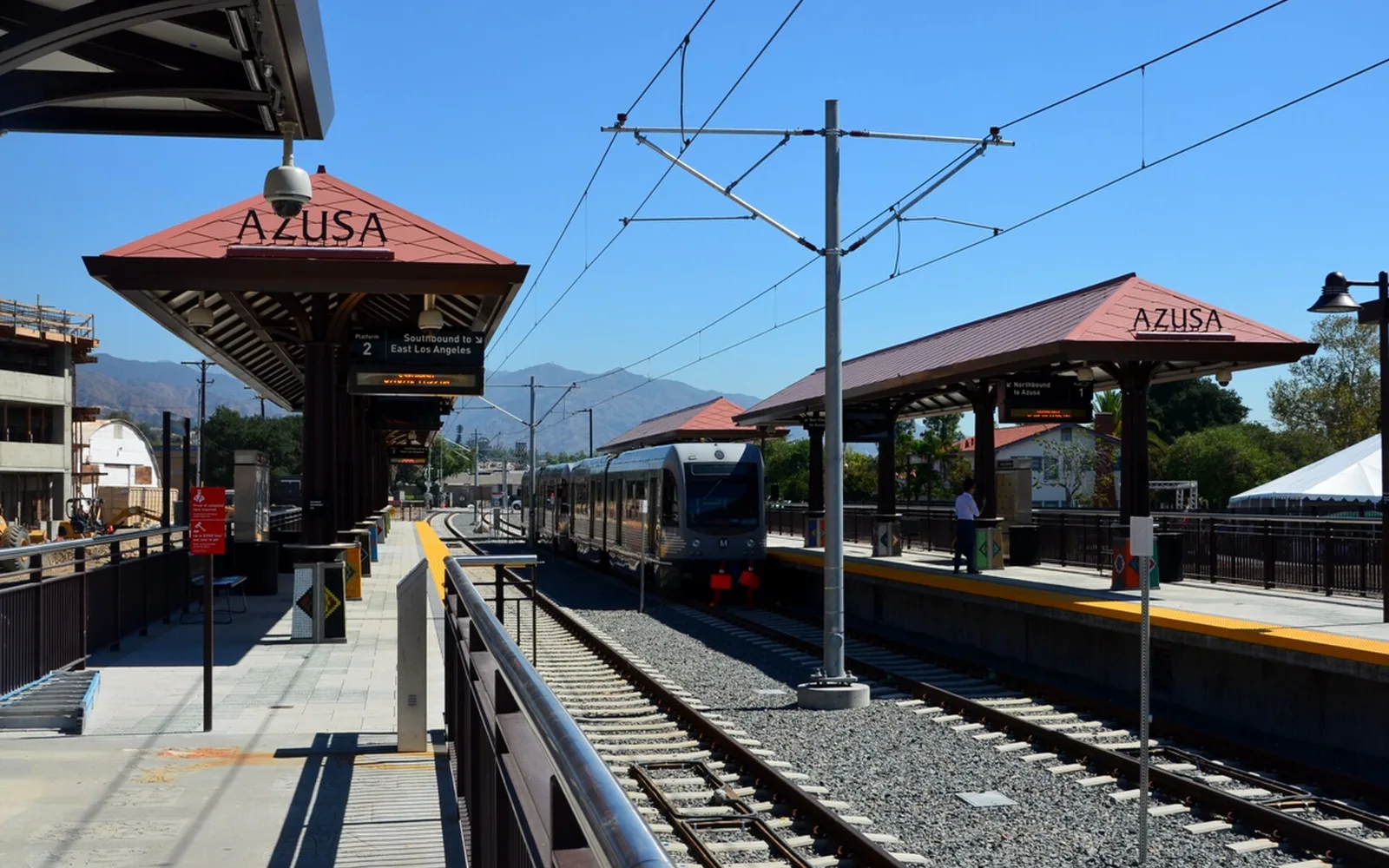
The land that became Azusa's downtown was the site of Rancho el Susa, a Mexican settlement established in 1841. After the Southern Pacific Railroad reached the area in January 1887, banker Jonathan Slauson saw an opportunity and laid out plans for a town. The railroad's arrival sparked growth, and by 1898 Azusa had formally incorporated as a city. Foothill Boulevard and Alosta Avenue, which pass through downtown, are segments of the historic Route 66 corridor that once carried travelers across the country; the city's location on that famous highway left a mark on its culture and commercial life.
Downtown Azusa still shows the grid of streets and the mix of commercial and residential buildings from that turn-of-the-century era, even as the city has grown around it. The neighborhoods surrounding downtown are home to long-established families, small family-owned businesses, and institutions that have been part of Azusa for generations. The city's name itself comes from the Tongva word 'Asuksa-nga,' meaning 'skunk place,' a reminder that this land has been inhabited for far longer than the century-and-a-quarter since the railroad arrived.
Neighborhoods with deep roots tend to raise families who stay, or who return—people who inherit homes, raise their own children in the same schools, and plan to spend decades in a community. For those families and for the business owners whose livelihoods are in downtown Azusa, a life insurance policy is often the safety net that allows someone to build something in one place without the fear that one death would scatter it. A term policy chosen to cover the years of building and raising, and then to end when the nest is empty, matches that rhythm exactly.